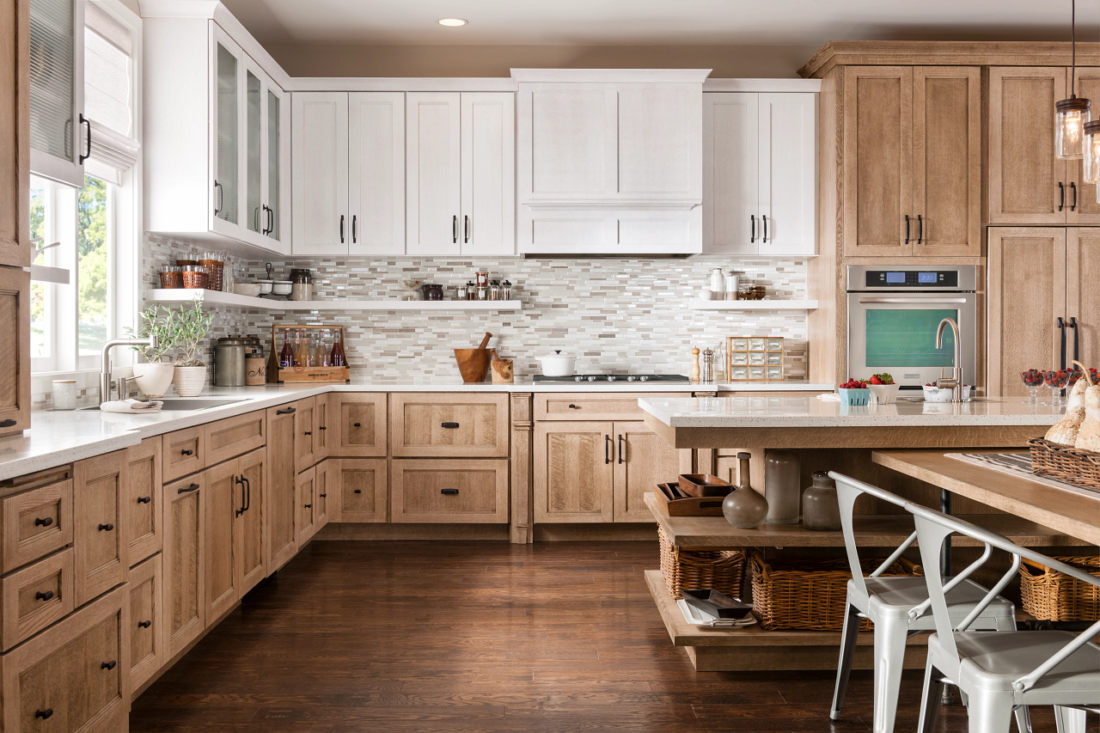


When it comes to kitchen remodeling, bigger isn’t always better. Adding square footage can be expensive and, depending on your home’s layout, may not even be necessary. Often, the best way to make a kitchen feel more functional, organized, and high-end is to make better use of the space you already have.
That’s where thoughtful cabinet features come in.
From pull-out storage to built-in organizers, the right cabinetry can transform underused spaces into highly functional storage zones—without moving a single wall. Here are some cabinet features that can add value, convenience, and style to your kitchen while keeping your existing footprint intact.
1. Pull-Out Pantry Cabinets
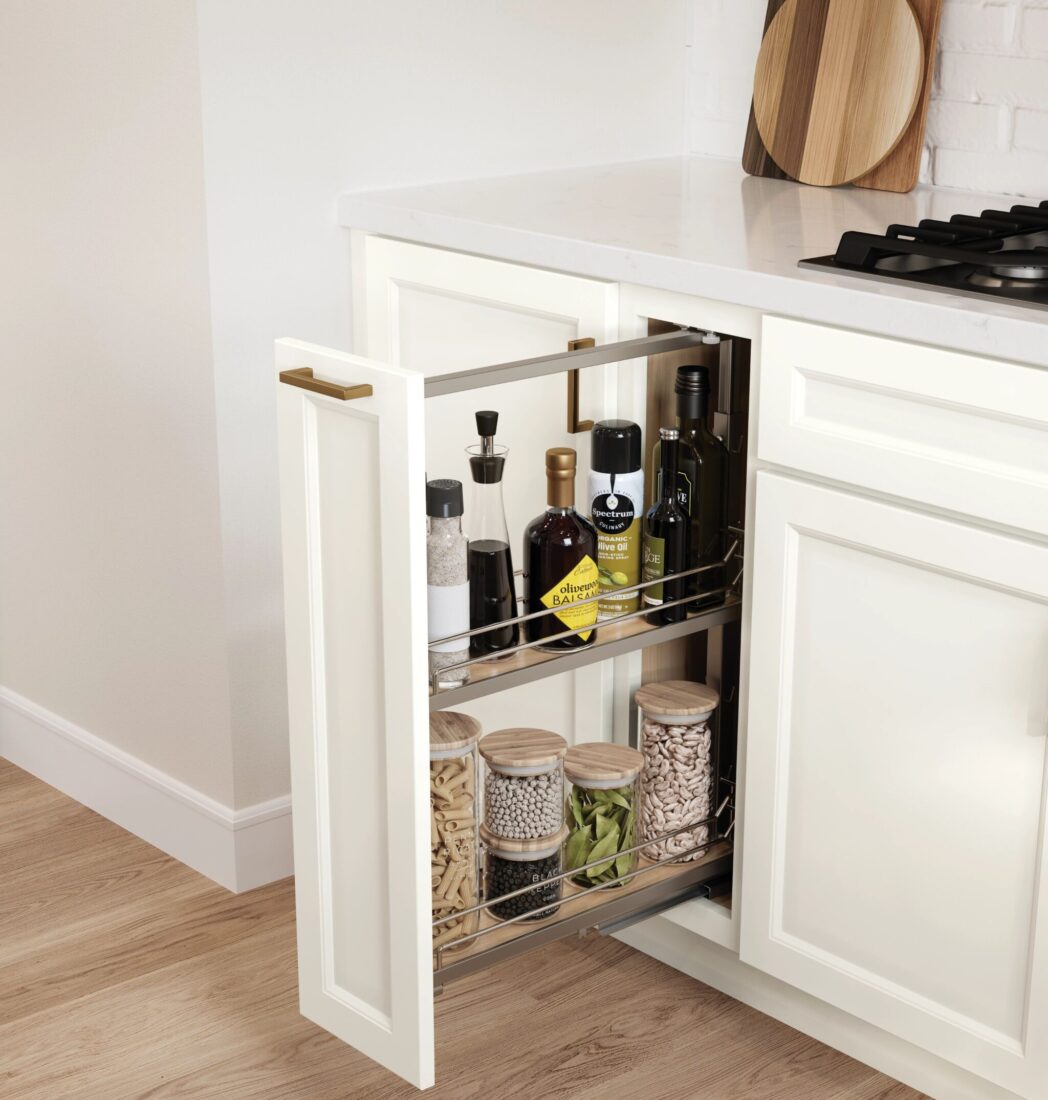
A traditional pantry can take up valuable floor space, but a narrow pull-out pantry cabinet can provide impressive storage in just a few inches of width.
Tall pull-out units make it easy to organize canned goods, spices, baking supplies, and other pantry staples. Because the shelves pull toward you, items stored toward the back are much easier to see and reach.
For smaller kitchens, this is one of the simplest ways to increase storage capacity without increasing the size of the room.
2. Deep Drawer Storage
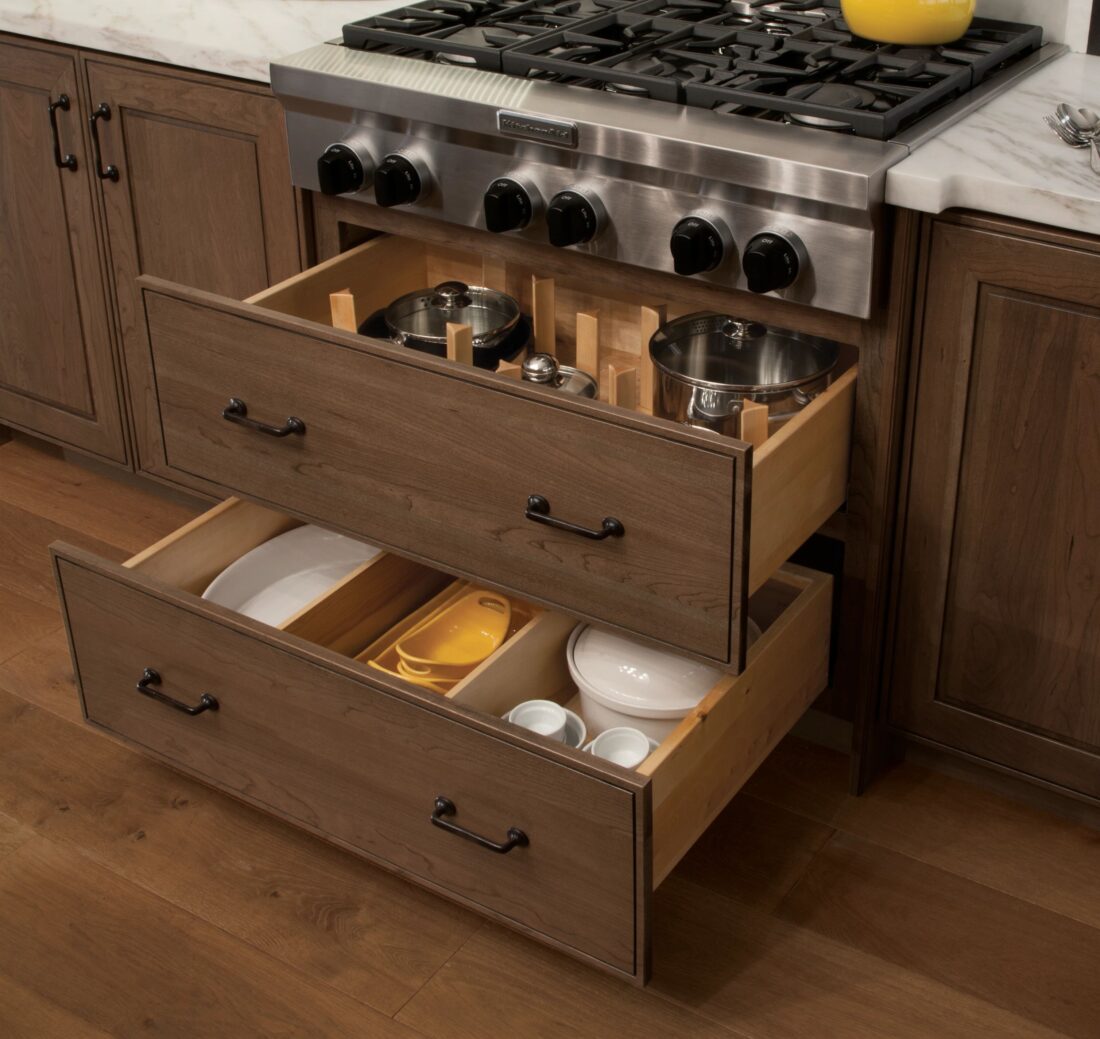
Replacing lower cabinets with deep drawers can make a surprisingly big difference in everyday kitchen functionality.
Instead of reaching into the back of a cabinet to find pots, pans, or food-storage containers, you can simply pull out a drawer and see everything at once. Wide drawers are particularly useful for cookware, while smaller drawers can keep utensils and kitchen tools organized.
This feature doesn’t add square footage—but it can make your existing cabinets work much harder.
3. Corner Cabinet Solutions
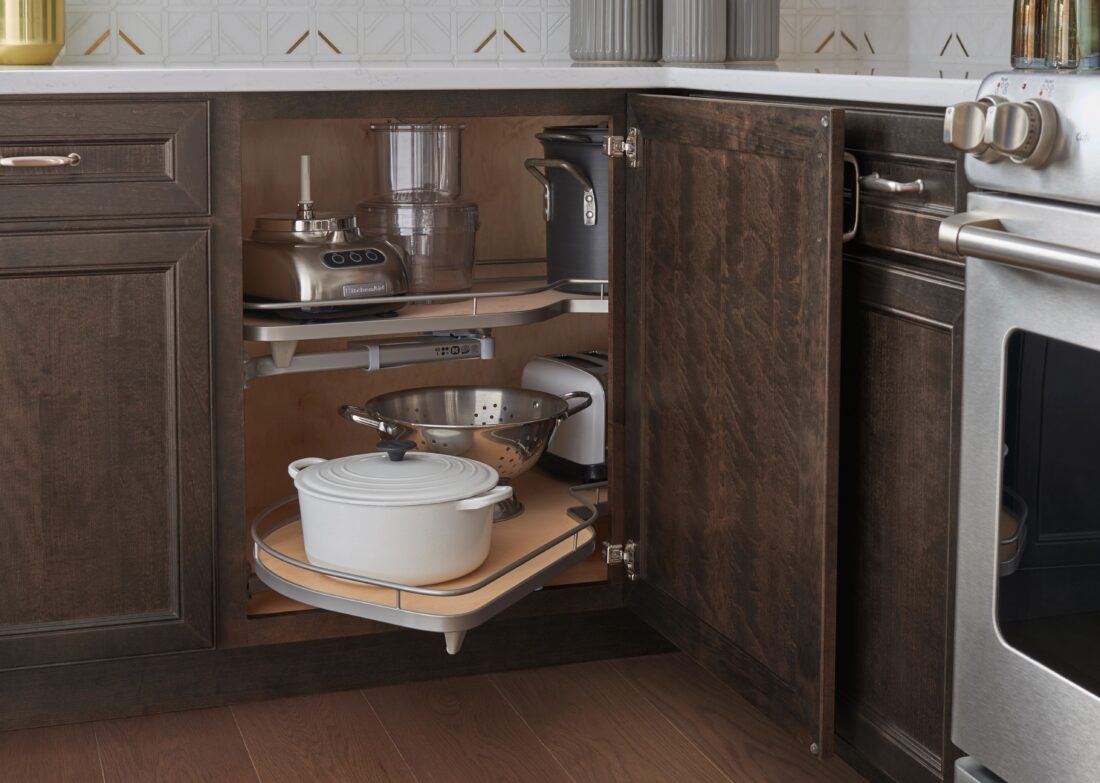
Kitchen corners are notorious for becoming difficult-to-use storage areas. Fortunately, modern cabinet hardware can turn these awkward spaces into valuable storage.
Features such as lazy Susans, swing-out shelves, and specialized corner drawers allow homeowners to access items that would otherwise disappear into the back of a cabinet.
Making a previously wasted corner functional can make your kitchen feel noticeably more efficient.
4. Cabinet Tray Dividers
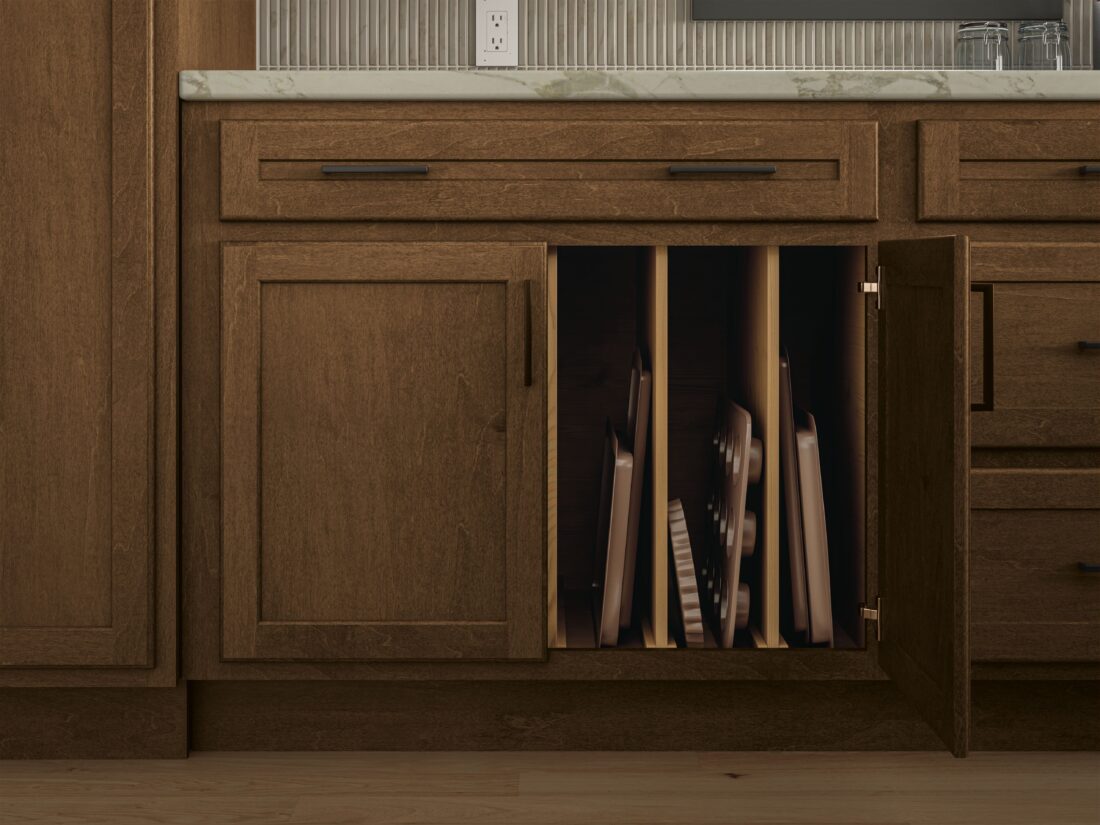
Large baking sheets, cutting boards, serving trays, and cooling racks can be difficult to store neatly. Instead of stacking them horizontally, consider installing vertical tray dividers inside a cabinet.
These simple organizers keep items upright and separated, making it easier to grab exactly what you need. They can also prevent the frustrating cabinet avalanche that happens when everything is stacked together.
5. Built-In Spice Storage
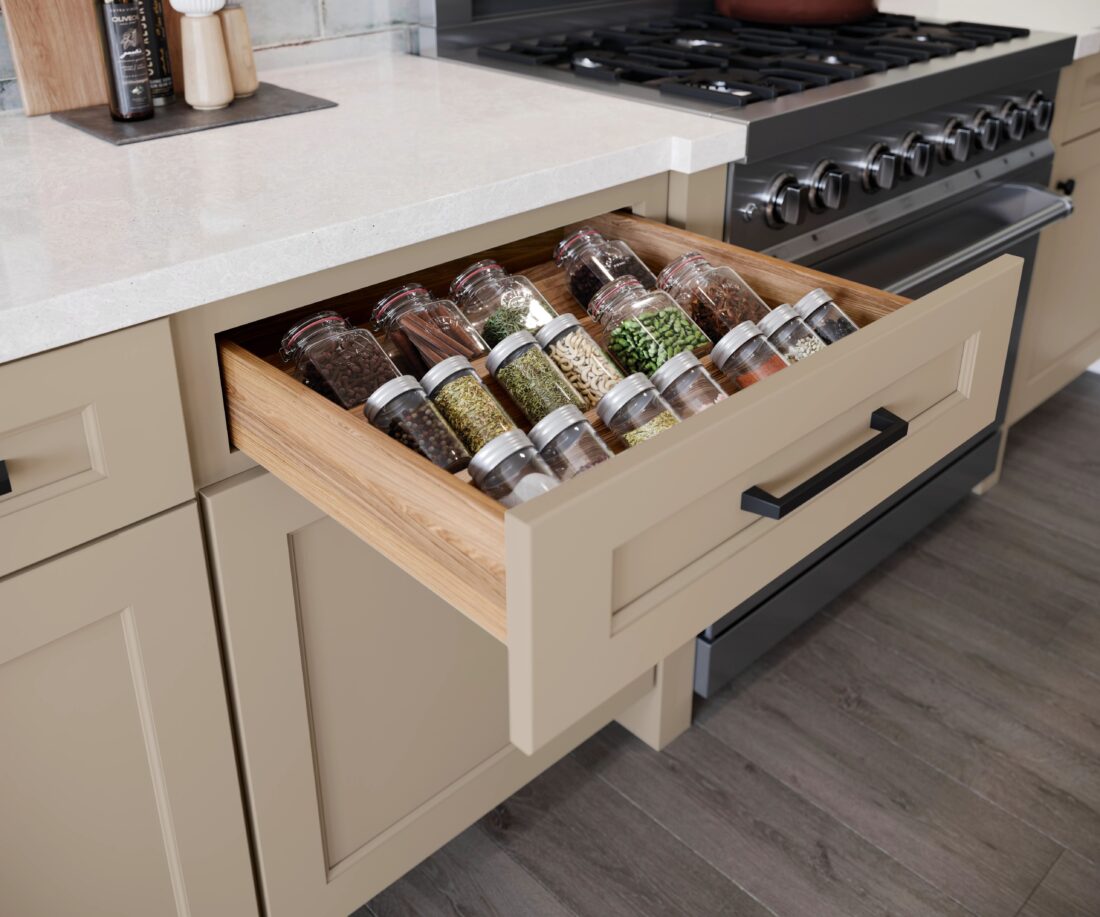
Spices don’t require much room, but they can quickly create clutter.
A narrow pull-out spice cabinet or dedicated spice drawer can keep bottles organized and accessible. Depending on the kitchen layout, these features can be incorporated beside the range or into another small section of cabinetry.
It’s a relatively small upgrade that can have a big impact on how efficiently you cook.
6. Appliance Garages
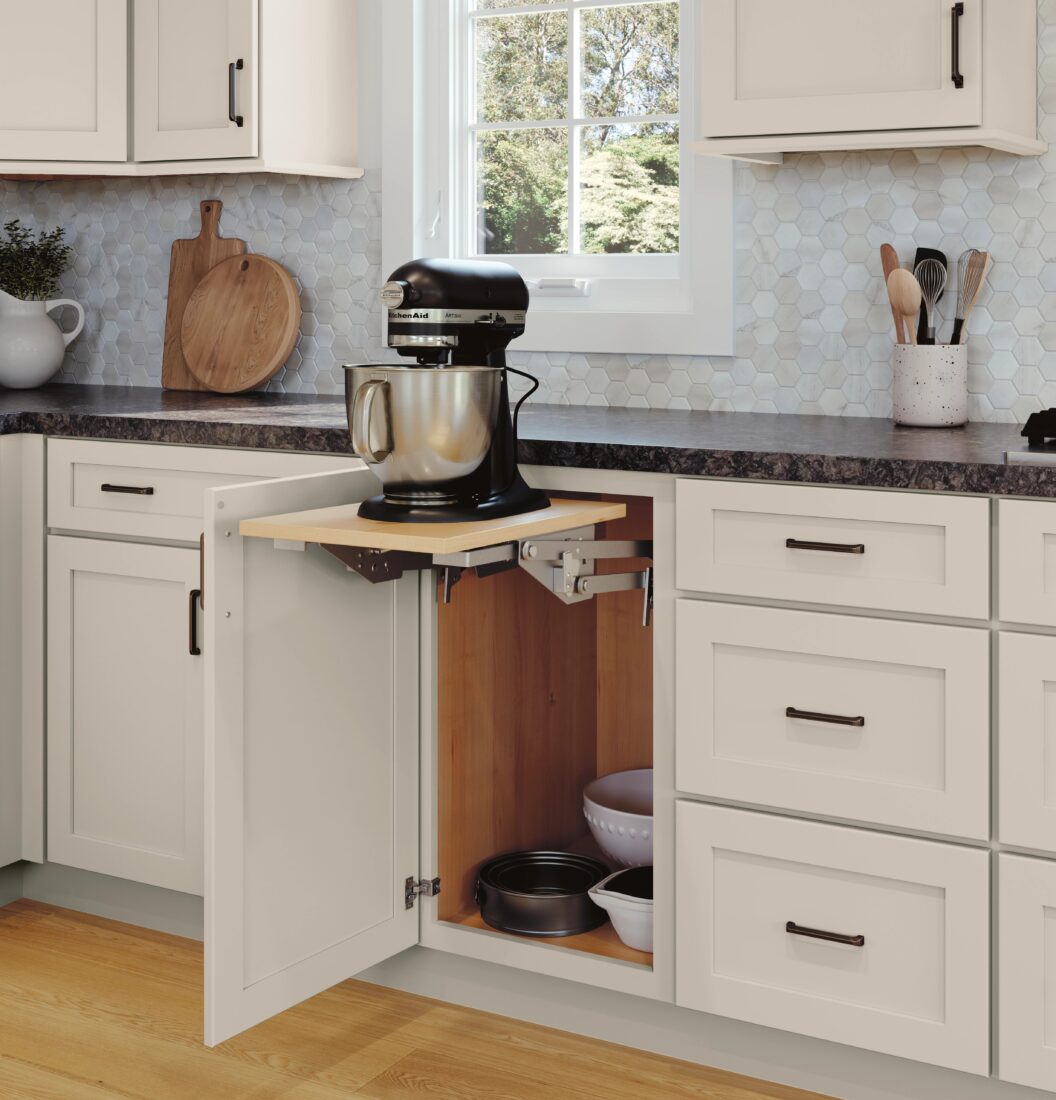
Small countertop appliances are useful, but they can make a kitchen feel crowded. An appliance garage provides a designated space for items such as coffee makers, toasters, and blenders while keeping them close at hand.
With the right design, the appliance can remain plugged in and ready to use while staying visually tucked away when it’s not needed.
The result is a cleaner countertop without sacrificing convenience.
7. Built-In Trash and Recycling Centers
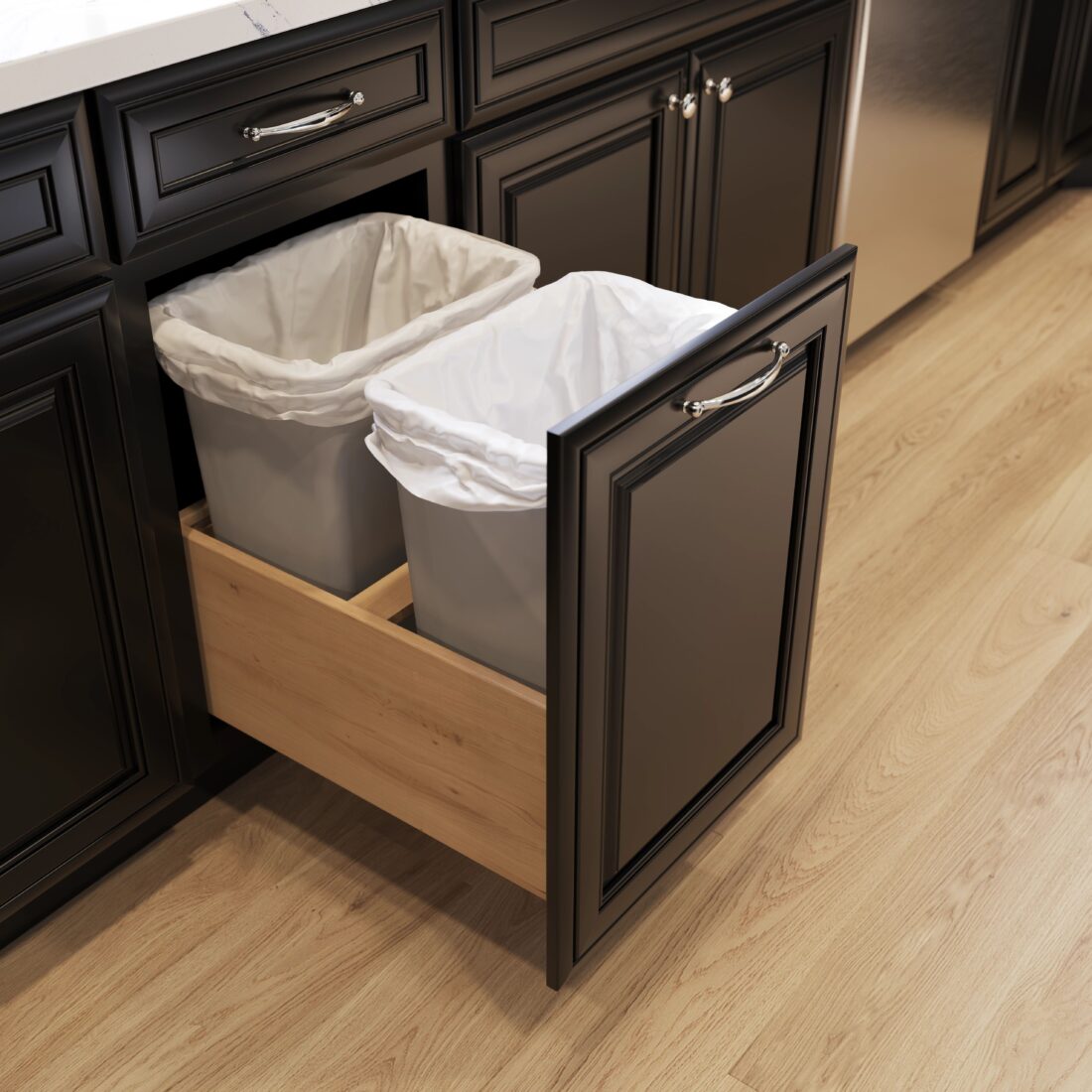
Trash and recycling bins can take up valuable floor space and interrupt the flow of a kitchen. Built-in pull-out waste and recycling centers allow these necessities to be integrated directly into the cabinetry.
This keeps bins concealed, improves organization, and makes cleanup more convenient.
It’s a great example of how cabinet design can improve a kitchen without requiring additional space.
8. Under-Sink Organization
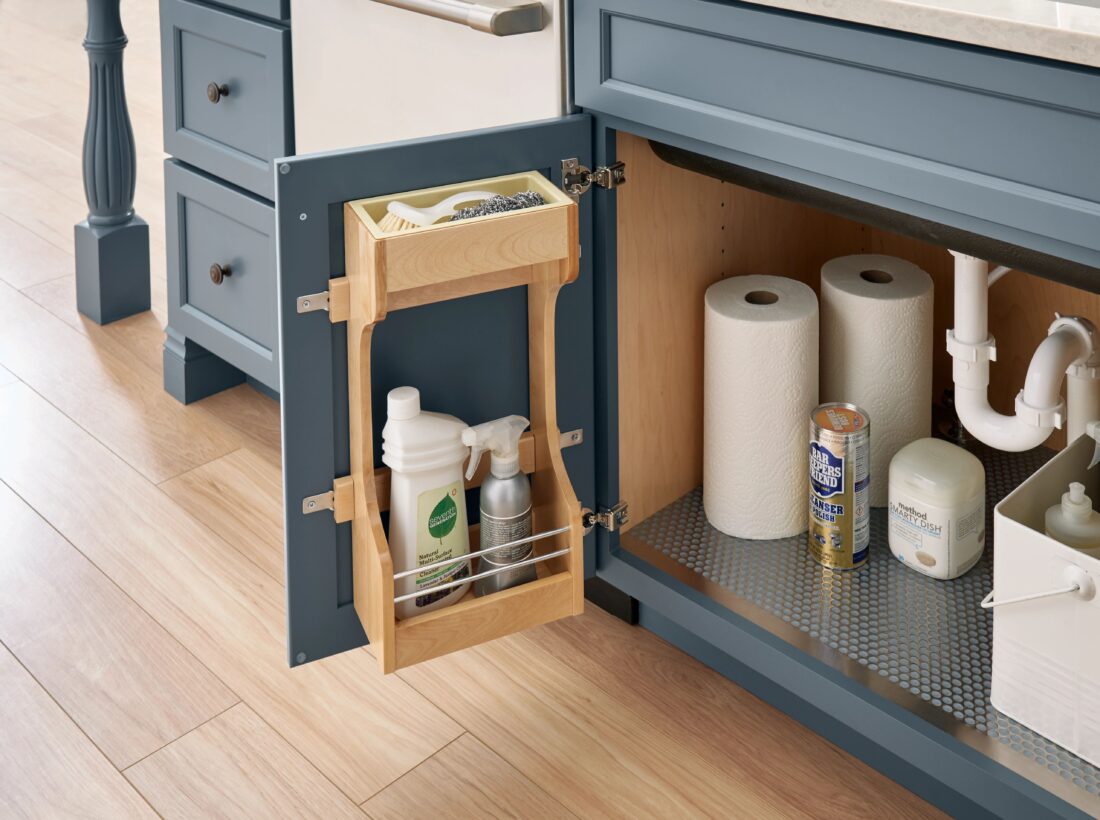
The area beneath the kitchen sink is often one of the least efficiently used cabinets in the home. Plumbing can make the space awkward, but custom organizers can help maximize every available inch.
Pull-out shelves, adjustable bins, cleaning-supply organizers, and door-mounted storage can turn this traditionally neglected area into a functional storage zone.
Even small improvements here can make everyday kitchen tasks easier.
9. Vertical Storage
When floor space is limited, look up.
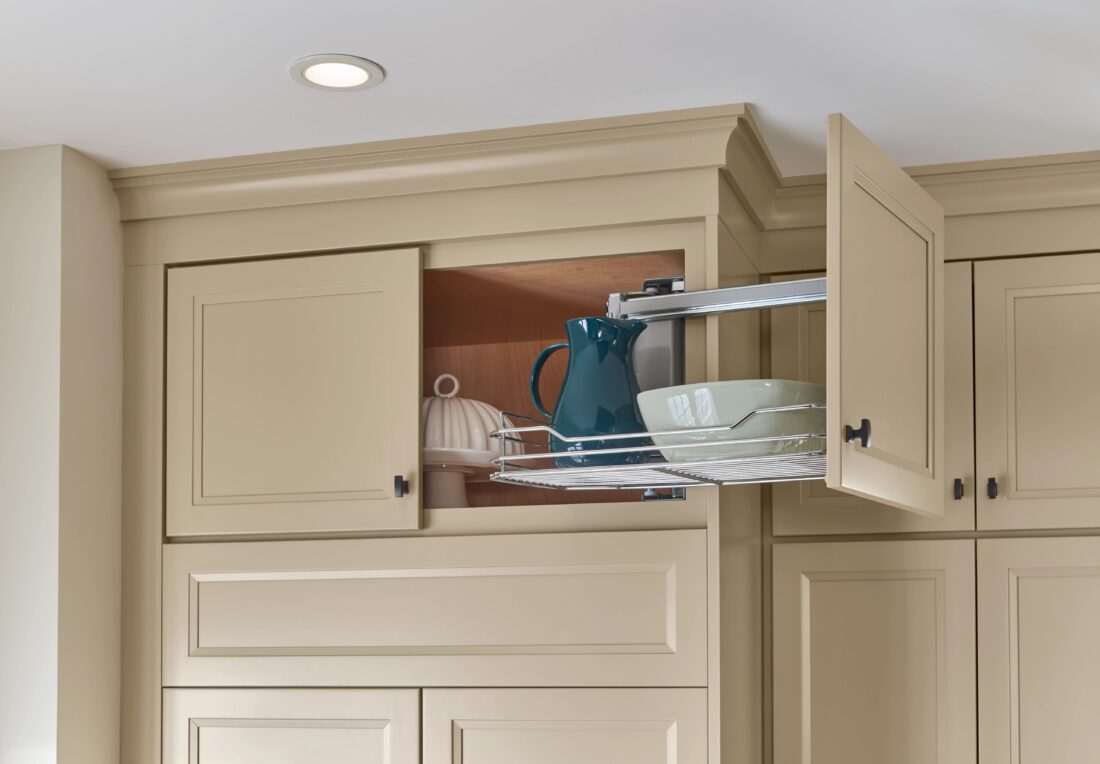
Tall cabinets can take advantage of vertical space that might otherwise go unused. Extending cabinetry closer to the ceiling can provide additional storage for serving pieces, seasonal items, small appliances, or less frequently used kitchenware.
Even if you don’t need more storage, taller cabinets can also create a more finished, substantial look.
10. Hidden Drawers
A drawer doesn’t have to look like a drawer.
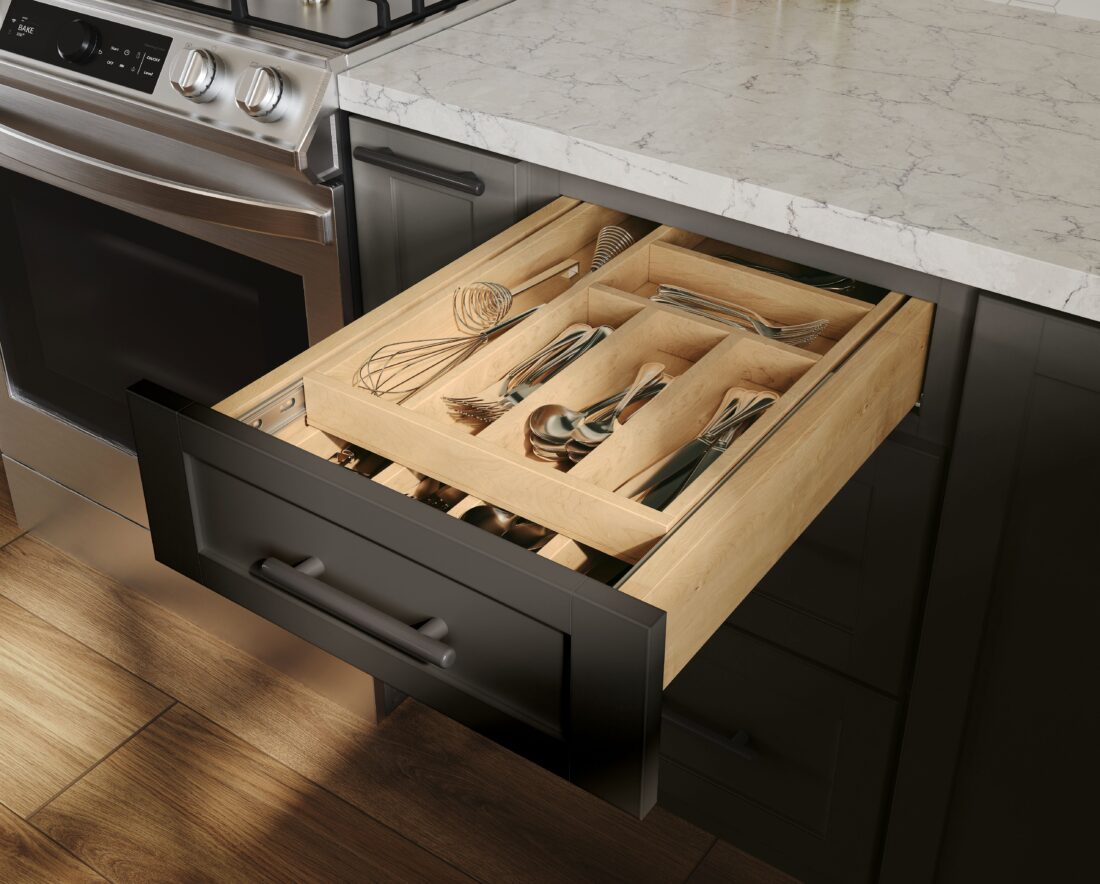
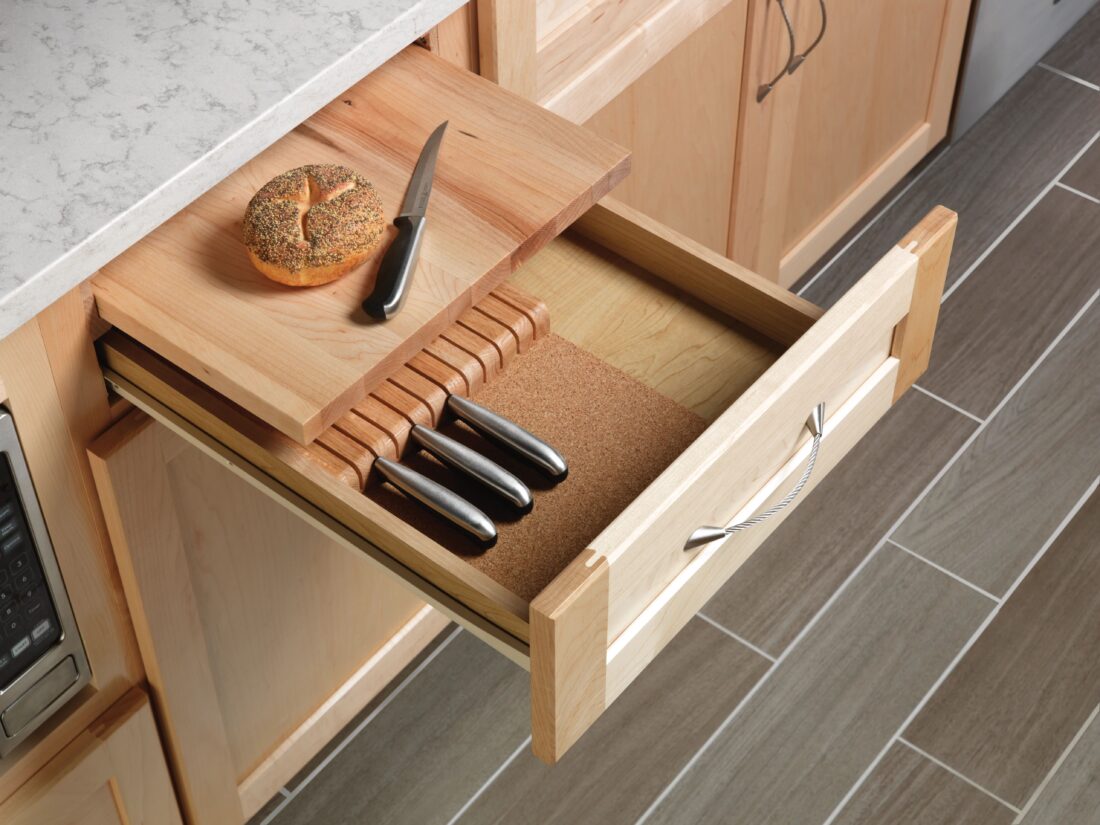
Hidden drawers installed inside larger cabinet drawers can create discreet storage for utensils, knives, measuring tools, or other smaller items. This layered approach keeps frequently used items organized without requiring additional cabinet space.
It’s a subtle feature, but one that can make a kitchen feel much more thoughtfully designed.
11. Roll-Out Shelves
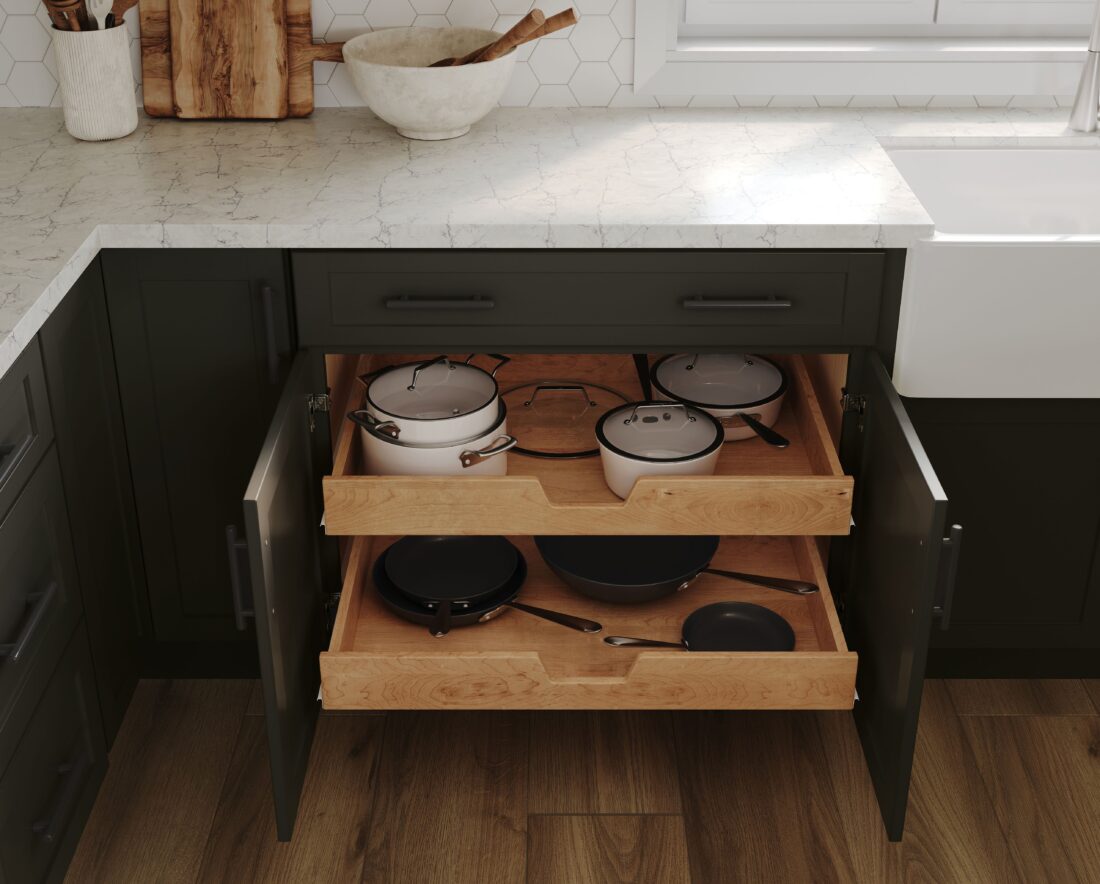
Deep cabinets can offer plenty of storage but still be frustrating to use. Roll-out shelves solve that problem by bringing the contents of the cabinet toward you.
Instead of kneeling down and reaching into a dark cabinet, you can pull the shelf out and easily access everything stored on it.
For homeowners focused on convenience and accessibility, roll-out shelves are an excellent investment.
12. Built-In Utensil and Knife Organizers
Kitchen drawers can quickly become cluttered when utensils and tools are allowed to mix together. Custom drawer inserts provide dedicated spaces for everything from spatulas and serving spoons to knives and measuring cups.
Because the organization is built into the cabinet design, you don’t need additional counter or drawer space to keep everything in order.
13. Charging Drawers
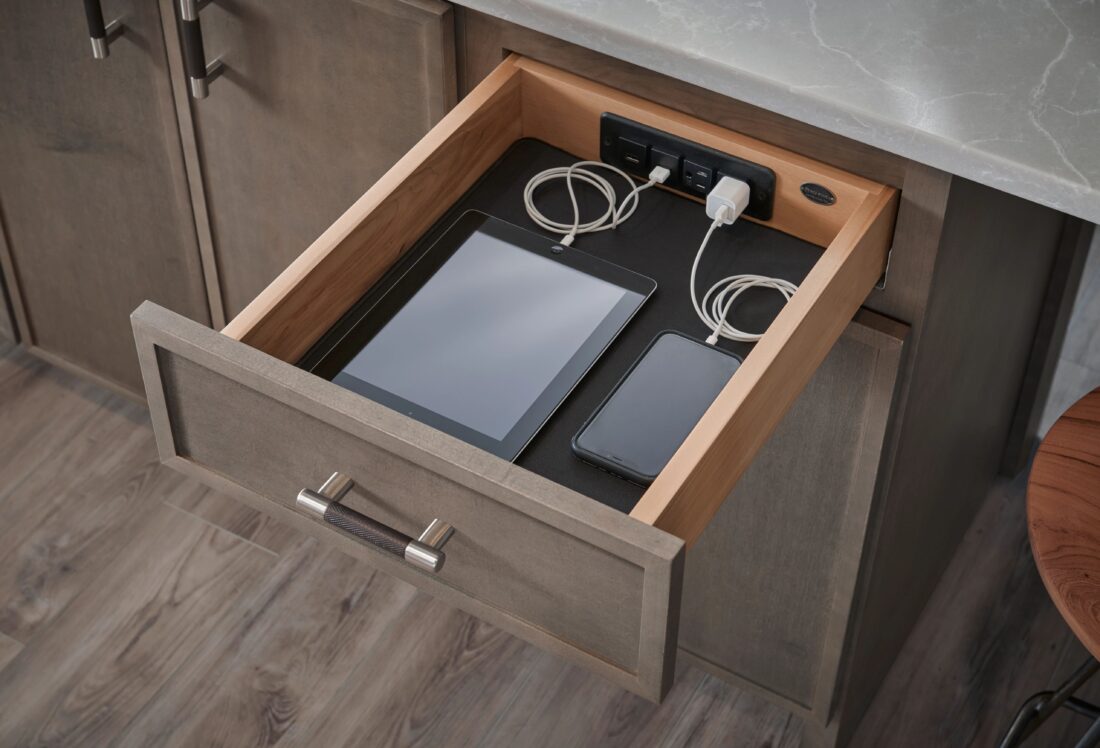
Today’s kitchens often double as homework stations, workspaces, and gathering areas. A dedicated charging drawer can provide a convenient place to charge phones, tablets, and other devices while keeping cords hidden.
Electrical components can be incorporated into the cabinetry during a remodel, creating a clean solution that doesn’t add clutter to the countertop.
14. Open Shelving Used Strategically
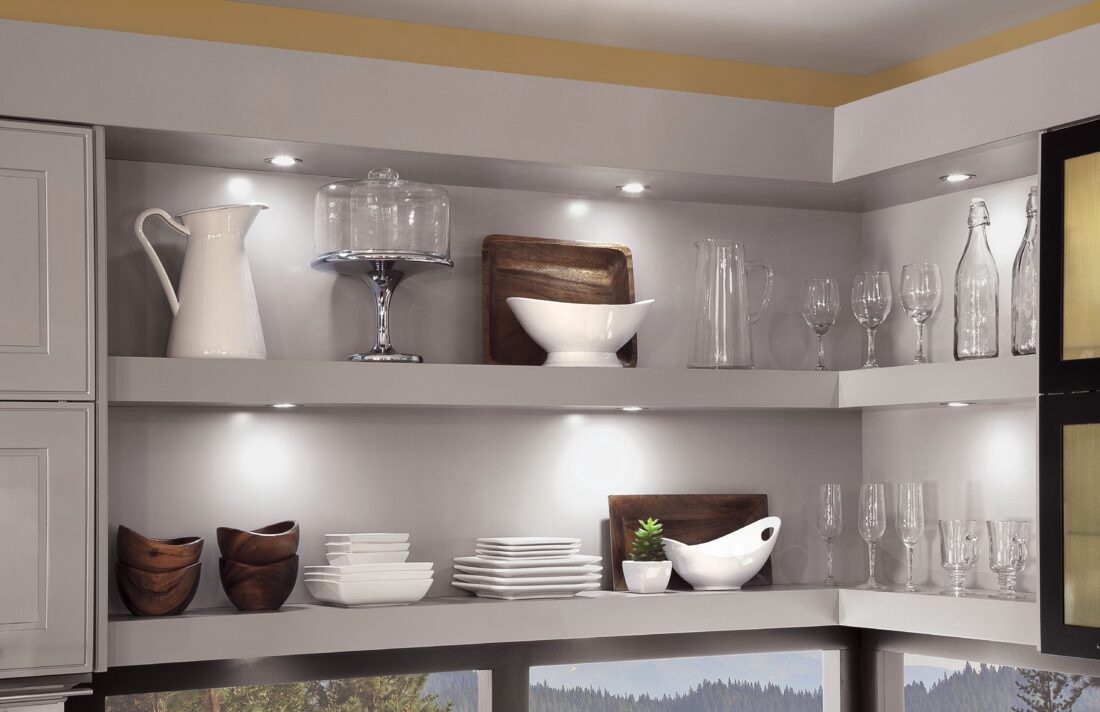
Open shelving isn’t necessarily about adding storage. It can also make a kitchen feel more open and visually interesting.
A small section of open shelving can display favorite dishes, cookbooks, or decorative pieces without requiring additional floor space. Used selectively, it can break up a wall of cabinetry and add personality to the kitchen.
The key is balance: too much open shelving can create visual clutter, while a carefully chosen section can become a strong design feature.
15. Customized Cabinet Interiors
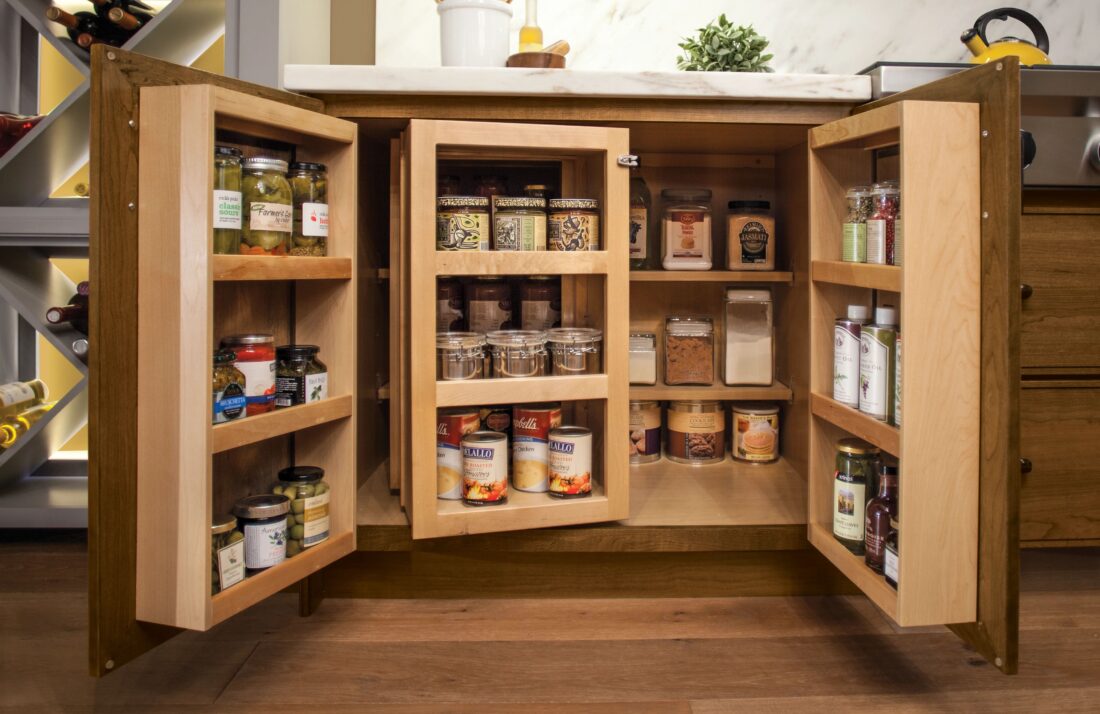
One of the biggest advantages of custom or semi-custom cabinetry is the ability to design the inside of the cabinets around the way you actually use your kitchen.
You can create dedicated storage for pots and pans, baking supplies, small appliances, cutting boards, spices, or even pet-feeding supplies.
Instead of asking, “How many cabinets can we fit?” a better question is, “How can each cabinet work harder?”
Make Every Inch Count
Adding value to a kitchen doesn’t always mean adding more square footage. In many cases, the greatest improvements come from making the existing space smarter.
Thoughtful cabinet features can improve organization, reduce clutter, simplify daily routines, and give a kitchen a more custom, high-end feel. Features such as pull-out shelves, deep drawers, corner organizers, appliance garages, and built-in storage solutions can turn overlooked spaces into some of the most useful parts of the room.
When planning a kitchen remodel, don’t just think about how much cabinet space you have. Think about how effectively that space works for you.
The best kitchen isn’t necessarily the biggest one. It’s the one where every inch has a purpose.